
The BTA CBSA Advantage: Mastering Blockchain Architecture by 2026
The BTA Certified Blockchain Solutions Architect (CBSA) certification validates a professional's expertise in designing and implementing robust blockchain solutions across various industries. This credential demonstrates a deep understanding of blockchain architecture principles, empowering individuals to work effectively with technical teams and make informed decisions on system selection for diverse use cases. As the blockchain landscape evolves rapidly, particularly with projections extending to 2026, the demand for certified architects capable of navigating complex decentralized ecosystems is escalating. This article delves into the critical relevance of the BTA CBSA, outlining the essential skills it hones and why it remains a pivotal certification for future-proof careers.
Validating Expertise: The BTA CBSA Certification
The BTA Certified Blockchain Solutions Architect (CBSA) certification signifies a professional's ability to conceptualize, design, and articulate blockchain-based solutions. This highly regarded credential, offered by the Blockchain Training Alliance (BTA), is designed for individuals who aspire to lead the technical direction of blockchain projects. Earning this certification confirms a candidate’s proficiency in bridging the gap between business requirements and technical implementation, a crucial skill set in a technology often misunderstood by non-technical stakeholders. It equips architects to navigate the complexities of decentralized ledger technologies (DLT) and translate intricate concepts into practical, deployable systems.
This certification is more than just a badge; it's a testament to a foundational understanding and practical application of blockchain architectural patterns. Professionals with the CBSA credential are prepared to tackle real-world challenges, from selecting the right consensus mechanisms to ensuring scalability and security in enterprise-grade applications. The comprehensive nature of the exam ensures that architects possess a holistic view of the blockchain ecosystem, allowing them to contribute meaningfully to strategic discussions and technical implementations alike. It sets a benchmark for quality and competence in a rapidly expanding field, demonstrating a commitment to professional excellence. To learn more about the official certification, you can visit the BTA CBSA official page.
Understanding the CBSA Exam Framework
Candidates pursuing the BTA Certified Blockchain Solutions Architect (CBSA) certification will encounter an exam structured to thoroughly assess their architectural prowess. Understanding the specific details of this assessment is crucial for effective preparation and confidence on exam day. The exam validates comprehensive knowledge required to design and implement robust blockchain solutions.
The CBSA exam is characterized by the following parameters:
-
Exam Name: Certified Blockchain Solutions Architect (CBSA)
-
Exam Code: CBSA
-
Exam Price: $275 (USD)
-
Duration: Candidates are allotted 90 minutes to complete the examination.
-
Number of Questions: The exam comprises 70 questions, testing a broad range of architectural concepts.
-
Passing Score: A minimum score of 70% is required to pass the certification exam.
This structure emphasizes both speed and accuracy, requiring test-takers to not only know the material but also to apply it efficiently under timed conditions. Preparing for these specific metrics helps candidates manage their time effectively and focus their study efforts on areas that align with the exam's weightage.
Mastering Core Competencies: Exploring the CBSA Syllabus
The BTA CBSA syllabus outlines the critical knowledge domains necessary for a blockchain solutions architect to excel in the current technological landscape. Each topic is carefully selected to ensure that certified professionals can confidently tackle complex design and implementation challenges. A deep understanding of these areas empowers architects to make informed decisions that drive successful blockchain initiatives.
The syllabus covers key areas, including:
-
Architect Blockchain Solutions: This core competency involves designing the overall structure, components, and interactions of a blockchain system. It encompasses understanding different architectural patterns, layer models, and how to integrate blockchain with existing enterprise systems. Architects must evaluate requirements, identify suitable blockchain components, and define secure, scalable, and efficient solutions.
-
Work Effectively with Blockchain Engineers and Technical Leaders: Effective communication and collaboration are paramount. This involves translating business needs into technical specifications, providing clear guidance to development teams, and engaging in constructive dialogues with technical leadership. Architects act as a crucial link, ensuring alignment between strategic goals and technical execution.
-
Choose Appropriate Blockchain Systems for Various Use Cases: The blockchain ecosystem offers a diverse range of platforms, each with unique strengths and limitations. Architects must possess the discernment to select the most suitable blockchain (e.g., public, private, consortium, or hybrid) based on factors like transaction throughput, consensus mechanism, privacy requirements, and governance models. This critical decision impacts the viability and success of the entire solution.
-
Work Effectively with Both Public and Permissioned Blockchain Systems: Proficiency in both public blockchains (like Ethereum, Bitcoin) and permissioned systems (like Hyperledger Fabric, R3 Corda) is essential. Architects need to understand the nuances of their respective consensus algorithms, smart contract capabilities, identity management, and operational complexities. This versatility enables them to design solutions tailored to specific industry regulations and business needs. Explore a range of available certifications from the Blockchain Training Alliance on their BTA Certifications page.
These syllabus topics collectively build a robust skill set, preparing architects not just for the exam but for real-world leadership in blockchain development.
Achieving Professional Growth with BTA CBSA
Obtaining the BTA Certified Blockchain Solutions Architect (CBSA) certification opens numerous avenues for professional advancement and significantly enhances one's standing in the blockchain industry. In a field that is still maturing, certified professionals stand out as credible experts capable of guiding organizations through complex technological shifts. This recognition translates into tangible career benefits, providing a competitive edge in a global talent market. The certification’s emphasis on practical application and strategic decision-making ensures that its holders are not just theoretically sound but also ready to deliver impactful results.
The benefits extend beyond individual career growth:
-
Enhanced Credibility: The CBSA validates your expertise, distinguishing you as a proficient blockchain architect. This credibility is vital when advising clients or leading internal projects, fostering trust in your recommendations and designs.
-
Increased Earning Potential: Certified professionals often command higher salaries due to their specialized skills and proven competence in a high-demand technology.
-
Career Advancement: The certification can accelerate career progression into senior architectural roles, lead positions, or specialized consulting opportunities within the blockchain sector. It equips individuals with the strategic foresight needed for leadership.
-
Validation of Practical Skills: Unlike purely academic qualifications, the CBSA focuses on the practical aspects of designing blockchain solutions, preparing candidates for real-world scenarios and operational challenges.
-
Industry Recognition: As a vendor-neutral certification from a respected organization like the BTA, the CBSA is widely recognized, enhancing your professional profile globally. This broad acceptance facilitates opportunities across various industries adopting blockchain technology.
These advantages underscore the value of the BTA CBSA as an investment in one’s professional future, aligning individual capabilities with the evolving demands of the digital economy.
Strategic Preparation for the CBSA Exam
Effective preparation for the BTA CBSA exam demands a structured and comprehensive approach, moving beyond rote memorization to truly grasp the underlying architectural principles. Given the breadth of the syllabus, candidates must strategically allocate their study time and resources to maximize their chances of success. A well-planned study regimen not only builds confidence but also ensures thorough coverage of all exam objectives.
Consider these strategic steps to optimize your preparation:
-
Review the Official Syllabus: Begin by thoroughly understanding the `BTA CBSA Certified Blockchain Solutions Architect exam syllabus`. Each topic listed is a potential exam area, so ensure you comprehend the scope and depth required for each.
-
Utilize a Study Guide: A `BTA Certified Blockchain Solutions Architect study guide` can provide a structured path through the complex topics, often including explanations, examples, and practice exercises. This helps in organizing your learning journey effectively.
-
Engage with Training Courses: Participating in `BTA Blockchain Solutions Architect training courses` offers guided learning from experienced instructors. These courses often include hands-on labs and interactive sessions that can deepen your understanding of practical application.
-
Practice with Exam Questions: Regularly attempting `BTA CBSA exam practice questions` is invaluable. This helps you become familiar with the exam format, question types, and time constraints. It also highlights areas where further study is needed. Certfun offers robust practice questions designed to mimic the actual exam experience, allowing you to gauge your readiness effectively.
-
Form Study Groups: Collaborating with peers can provide different perspectives and clarify difficult concepts. Discussing topics and explaining them to others often solidifies your own understanding.
-
Schedule Regular Reviews: Periodically revisit topics to reinforce learning. Spaced repetition can significantly improve retention, especially for complex architectural patterns and technical specifications.
Adhering to a diligent preparation strategy is key to mastering the `BTA CBSA certification exam objectives` and confidently approaching the test. A well-rounded approach ensures that you are not just prepared for the questions, but also for the responsibilities of a certified architect. The detailed syllabus can be found on Certfun’s BTA CBSA exam syllabus page.
Shaping Your Blockchain Architect Career
A BTA Certified Blockchain Solutions Architect (CBSA) certification plays a pivotal role in defining and advancing a professional's career trajectory within the burgeoning blockchain sector. This credential is not merely a recognition of current skills but a launchpad for future opportunities, enabling individuals to contribute to groundbreaking projects and assume leadership positions. The career path for a CBSA-certified professional is dynamic, offering diverse roles that span various industries and technological implementations.
The career landscape for a CBSA professional often involves:
-
Solution Design Leadership: Architects are at the forefront of conceptualizing and designing intricate blockchain solutions, ensuring they meet business objectives while adhering to technical best practices.
-
Technical Advisory Roles: Providing expert guidance to organizations on blockchain adoption, strategy, and implementation, influencing key technology decisions.
-
Enterprise Integration Specialist: Working on integrating blockchain solutions with existing legacy systems, requiring a deep understanding of enterprise architecture and interoperability.
-
Research and Development: Contributing to the evolution of blockchain technology, exploring new protocols, consensus mechanisms, and use cases.
-
Consulting Opportunities: Advising multiple clients across different sectors on their blockchain journey, from initial assessment to full-scale deployment.
The demand for skilled blockchain architects is projected to grow substantially as more industries leverage decentralized technologies for efficiency, transparency, and security. Organizations are increasingly looking for professionals who can navigate both the technical and strategic aspects of blockchain implementation. For organizations seeking to train their teams or explore custom solutions, the Blockchain Training Alliance offers tailored services, which you can inquire about on their BTA inquiry page.
Ensuring Readiness: Effective Study Practices
Beyond structured preparation, effective study practices are vital for any aspiring BTA CBSA professional to fully internalize the complex concepts and apply them under exam conditions. This involves more than just reading; it requires active engagement with the material, self-assessment, and continuous refinement of understanding. Cultivating good study habits can significantly influence retention and the ability to recall information efficiently when it matters most.
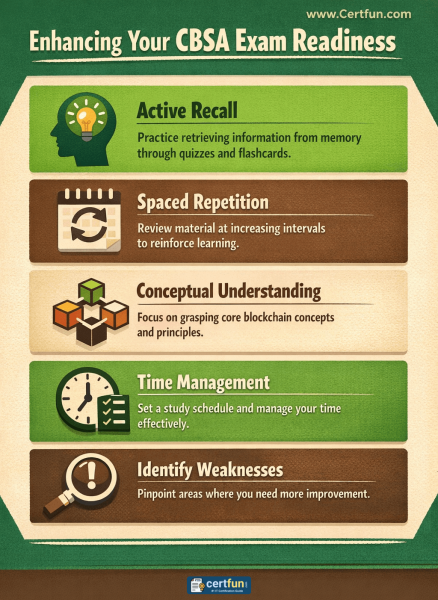
To ensure peak readiness, consider these practices:
-
Active Recall: Instead of passively rereading notes, actively test yourself by trying to explain concepts from memory. This strengthens neural pathways and improves recall during the exam. Flashcards, self-quizzing, and drawing diagrams are excellent methods.
-
Spaced Repetition: Review topics at increasing intervals over time. This method is highly effective for long-term retention of technical details and architectural patterns, helping to embed knowledge deeply.
-
Conceptual Understanding: Focus on understanding *why* certain architectural choices are made, rather than just *what* they are. The `BTA Certified Blockchain Solutions Architect exam topics` are designed to test your ability to apply knowledge, not just memorize definitions.
-
Time Management: Practice answering questions under timed conditions to improve your pacing. The 90-minute duration for 70 questions means each question allows roughly 1 minute and 17 seconds, highlighting the need for efficient decision-making.
-
Identify Weaknesses: After practice tests, thoroughly review incorrect answers to understand the conceptual gaps. Dedicate extra study time to these weaker areas. This targeted approach is more efficient than broad, unfocused studying.
By integrating these disciplined study practices, candidates can approach the BTA CBSA exam with a high degree of confidence and a robust foundation of knowledge, ready to demonstrate their capabilities as a certified blockchain solutions architect.
Conclusion
The BTA CBSA certification stands as a robust benchmark for professionals aiming to design and implement cutting-edge blockchain solutions. As the digital economy continues its rapid evolution, the skills validated by this certification - from architectural design to effective collaboration and system selection - are becoming indispensable. Individuals who attain the CBSA are not merely keeping pace with technological advancements; they are actively shaping the future of decentralized applications and enterprise blockchain adoption.
For those committed to elevating their career in blockchain architecture and contributing to innovative solutions, the BTA CBSA offers a clear, rewarding path. Equip yourself with the essential skills for 2026 and beyond. Start your journey today by exploring comprehensive study materials and practice exams available to help you secure this vital credential. Make a strategic investment in your professional future and become a certified leader in blockchain technology.
Frequently Asked Questions
1. What is BTA CBSA certification?
The BTA CBSA (Certified Blockchain Solutions Architect) is a professional certification offered by the Blockchain Training Alliance (BTA). It validates an individual's expertise in designing and architecting robust blockchain solutions for various business and technical requirements, including working with both public and permissioned systems.
2. How do I prepare for the BTA CBSA certification exam?
Preparation involves reviewing the official syllabus, utilizing a comprehensive study guide, enrolling in BTA Blockchain Solutions Architect training courses, and practicing with BTA CBSA exam practice questions. Consistent study and understanding of core architectural principles are key.
3. Is BTA CBSA certification worth it for my career?
Yes, the BTA CBSA certification is highly valuable as it enhances your credibility, increases earning potential, and opens doors to advanced roles in the rapidly growing blockchain industry. It signals to employers that you possess the necessary skills to design and implement complex blockchain solutions.
4. What are the BTA blockchain architect certification requirements?
While there are no formal prerequisites to take the exam, it is recommended that candidates have a strong understanding of blockchain fundamentals, distributed systems, and architectural design principles. Experience in IT architecture or development can be highly beneficial.
5. What is the BTA CBSA exam registration process?
The BTA CBSA exam registration process typically involves purchasing a voucher directly from the Blockchain Training Alliance website or an authorized training partner. After purchase, you will receive instructions on how to schedule your exam appointment through an online proctoring service or at a designated testing center.
- BTA Certification |
- CBSA Online Test |
- CBSA Questions |
- CBSA Quiz |
- CBSA |
- BTA CBSA Certification |
- CBSA Practice Test |
- CBSA Study Guide |
- BTA CBSA Question Bank |
- CBSA Syllabus |
- CBSA Books |
- CBSA Certification Syllabus |
- BTA Solution Architect Certification |
- CBSA Sample Questions |
- BTA CBSA Practice Test Free |
- Certified Blockchain Solutions Architect (CBSA)


