
Stop Wasting Time: HPE7-S02 Prep Done Right
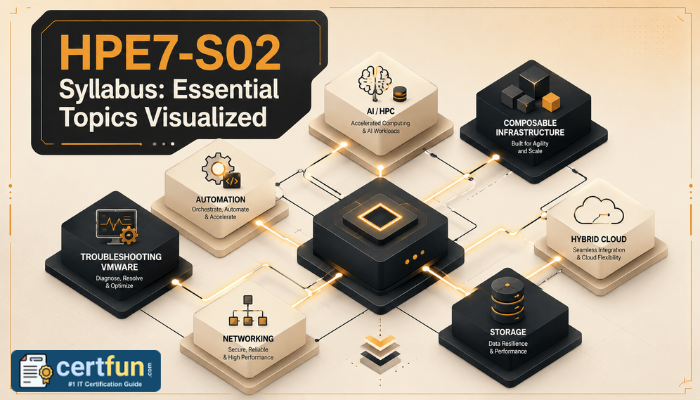
The HPE Master ASE - Compute Integrator Solutions certification, validated by the HPE7-S02 exam, signifies an individual's advanced expertise in designing, integrating, and managing complex HPE compute solutions. This credential is crucial for IT professionals aiming to demonstrate their proficiency in areas like composable infrastructure, AI/HPC solutions, and virtualization integration within an HPE ecosystem. This comprehensive guide is designed to help you prepare effectively for the HPE7-S02 exam, offering curated insights into the exam structure, syllabus topics, and optimal study resources to streamline your path to success. By focusing on targeted preparation and understanding the core competencies required, candidates can significantly enhance their chances of achieving this prestigious HPE Master ASE certification.
HPE7-S02 Exam Structure and Logistics
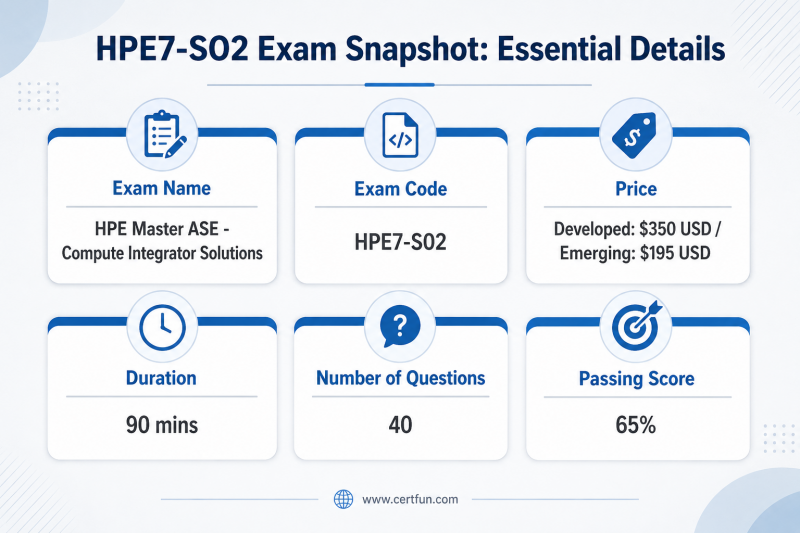
Achieving the HPE Master ASE Compute Integrator Solutions certification requires passing the HPE7-S02 exam, which tests a candidate's practical knowledge and architectural understanding. This examination is designed to assess technical professionals on their ability to integrate and manage advanced HPE compute technologies effectively. Understanding the logistics and format of the HPE7-S02 is the foundational step for any candidate embarking on their certification journey. It provides a clear roadmap of what to expect on exam day.
The HPE7-S02 exam is structured to efficiently gauge your proficiency across various critical domains. Here are the essential details candidates need to know:
-
Exam Name: HPE Master ASE - Compute Integrator Solutions
-
Exam Code: HPE7-S02
-
Exam Price: Developed Countries: 350 (USD) / Emerging Countries: 195 (USD)
-
Duration: 90 minutes
-
Number of Questions: 40 questions
-
Passing Score: A minimum of 65% is required to pass the exam.
These details highlight the time constraint and the number of questions, emphasizing the need for both accuracy and efficient time management during the test. For additional information and to register, candidates can visit the official HPE certification page.
Core Competencies Validated by HPE7-S02
The HPE7-S02 exam is more than just a test of knowledge; it’s an evaluation of a candidate’s practical ability to implement and manage sophisticated HPE compute environments. This certification validates a robust skill set essential for integrators working with modern data center solutions. Professionals who earn this credential demonstrate proficiency in areas critical for current and future enterprise IT infrastructure. The competencies assessed span hardware and software integration, management, and troubleshooting within complex HPE architectures.
Achieving the HPE Master ASE Compute Integrator Solutions certification signifies expertise in the following key areas:
-
Designing and detailing HPE AI and HPC solutions to meet diverse workload requirements.
-
Integrating and managing HPE compute solutions with third-party virtualization and container platforms.
-
Implementing and troubleshooting HPE Private Cloud AI with NVIDIA.
-
Managing and optimizing various HPE compute and HPC solutions.
-
Applying security considerations within HPE compute solutions.
These validated skills are directly applicable to real-world scenarios, enabling certified professionals to drive successful digital transformation initiatives and maintain high-performance, resilient compute infrastructures.
Navigating the HPE7-S02 Exam Syllabus Topics
A thorough understanding of the HPE7-S02 exam syllabus is paramount for focused preparation. The syllabus outlines the specific technical domains and competencies that candidates are expected to master. Each section of the syllabus carries a different weight, indicating the relative importance and the depth of knowledge required for that particular topic. By strategically allocating study time based on these weightages, candidates can optimize their preparation and address the most critical areas effectively.
The HPE7-S02 exam covers a broad spectrum of advanced HPE compute technologies, broken down into distinct categories:
HPE AI and HPC Solution Architecture (35%)
This significant portion of the exam focuses on the detailed understanding of HPE's offerings in Artificial Intelligence and High-Performance Computing. It assesses a candidate's ability to articulate how both hardware and software components within these solutions cater to demanding workload requirements.
-
Detail the hardware of HPE AI and HPC solutions, explaining how they meet workload requirements.
-
Detail the software components of HPE AI and HPC solutions, in particular HPE Private Cloud AI with NVIDIA, explaining the usage and benefits of each.
Implementing and Managing HPE Compute Solutions (45%)
The largest section of the exam, this area delves into the practical aspects of setting up, managing, and integrating HPE compute solutions. It emphasizes procedural correctness and the ability to work with various platforms, including third-party virtualization and container technologies.
-
Follow the correct processes to set up and manage an HPE Private Cloud AI with NVIDIA solution.
-
Follow the correct processes to set up and manage HPE compute solutions that integrate with third-party virtualization and container platforms.
-
Describe management options for HPE HPC solutions.
Advanced Technologies and Troubleshooting (10%)
This section focuses on niche yet critical areas, including specific HPE AI tools and troubleshooting methodologies for common compute environments.
-
Demonstrate HPE AI Essentials and NVIDIA AI Enterprise.
Optimization and Troubleshooting HPE Private Cloud AI (10%)
A dedicated segment to ensuring the efficient operation and swift resolution of issues within HPE Private Cloud AI environments.
-
Optimize and troubleshoot an HPE Private Cloud AI solution.
-
Troubleshoot HPE compute solutions running VMware.
This detailed breakdown allows candidates to prioritize their study efforts, ensuring a comprehensive grasp of both theoretical concepts and practical implementation skills. Candidates looking for practice questions to test their knowledge can explore HPE7-S02 sample questions.
Crafting Your HPE7-S02 Preparation Strategy
Effective preparation for the HPE7-S02 exam goes beyond simply memorizing facts; it involves building a robust understanding of HPE compute integrator solutions. A well-structured study plan incorporates various resources, hands-on practice, and consistent review to ensure comprehensive knowledge and confidence. This strategic approach minimizes wasted time and maximizes learning efficiency. Candidates should tailor their plan to their existing experience and learning style.
Official HPE Training and Documentation
HPE provides official training courses specifically designed to prepare candidates for their certifications. These courses often include lab exercises, expert instruction, and comprehensive study materials directly aligned with the exam objectives. Leveraging these official resources is highly recommended as they offer the most accurate and up-to-date information.
-
HPE Training Courses: Look for official HPE-led or authorized partner courses covering advanced compute solutions, Synergy, ProLiant, and AI/HPC integration. These often provide practical labs.
-
Official Documentation: Dive deep into HPE's extensive library of white papers, technical manuals, installation guides, and best practice documents for HPE Synergy, ProLiant servers, GreenLake for compute, and specific AI/HPC solutions.
-
HPE Community Forums: Engage with the HPE community. These forums are excellent places to ask questions, learn from others' experiences, and stay updated on common issues and solutions.
Hands-on experience with HPE equipment or simulators, if available, can significantly solidify theoretical knowledge and translate it into practical skills, which is invaluable for a Master ASE certification.
Study Materials and Resource Roundups
Beyond official training, a variety of supplementary study materials can enhance your preparation for the HPE7-S02 exam. Curating a diverse set of resources helps to cover topics from different perspectives and reinforce learning. Ethical preparation involves using legitimate study aids and avoiding any unethical practices like exam dumps.
-
Certification Study Guides: Seek out reputable third-party study guides that specifically target the HPE7-S02 exam or the broader HPE Master ASE Compute Integrator Solutions certification path. These often condense information and provide focused explanations.
-
Technical Books: For deeper dives into specific technologies like server virtualization (VMware, containers), composable infrastructure, or AI/HPC concepts, consult industry-standard technical books. These can provide foundational knowledge that complements HPE-specific information.
-
Online Learning Platforms: Explore platforms offering courses on data center compute infrastructure, server virtualization, and advanced HPE technologies. Many platforms offer video lectures, quizzes, and even virtual lab environments.
-
Blogs and Articles: Follow industry blogs and technical articles from HPE experts or independent consultants. These often provide real-world insights, deployment best practices, and troubleshooting tips that can be directly relevant to the exam's practical scenarios.
The Role of Practice Questions and Mock Exams
Testing your knowledge regularly is a critical component of any successful exam preparation strategy. Practice questions and mock exams serve multiple purposes: they identify knowledge gaps, familiarize you with the exam format, and help improve time management. For candidates seeking to refine their readiness, platforms like HPE7-S02 exam guide offer valuable practice.
-
Identifying Weak Areas: By answering practice questions, you quickly discover which syllabus topics require further study. Focus your efforts on these areas to turn weaknesses into strengths.
-
Familiarity with Exam Format: Mock exams simulate the actual test environment, reducing anxiety on exam day. You become accustomed to the question types, pacing, and interface.
-
Time Management Skills: The HPE7-S02 exam has a time limit. Practicing under timed conditions helps you learn to allocate your time effectively across all questions, ensuring you complete the exam without rushing through critical sections.
-
Building Confidence: Consistently performing well on practice tests builds confidence, which is essential for maintaining a positive mindset and reducing stress during the actual exam.
Remember, the goal of practice tests is not just to get the right answers, but to understand the "why" behind them. Avoid the temptation to use unofficial "dumps" as they often contain incorrect information and do not truly prepare you for the nuanced understanding required by the HPE7-S02 certification. Ethical preparation ensures long-term career success and genuine expertise.
HPE Master ASE Certification Benefits and Career Growth
Earning the HPE Master ASE - Compute Integrator Solutions certification (HPE7-S02) positions professionals at the forefront of advanced compute technology. This credential is not merely an achievement; it is a strategic asset that unlocks significant career opportunities and validates a deep level of technical mastery. The benefits extend across professional credibility, project leadership, and overall career trajectory within the competitive IT landscape.
Enhanced Professional Credibility and Industry Recognition
The HPE Master ASE designation is highly regarded within the industry, signaling a top-tier level of expertise in HPE compute solutions. It differentiates certified professionals from their peers, establishing them as trusted advisors and subject matter experts.
-
Demonstrated Expertise: It serves as a clear indicator of your ability to design, integrate, and manage complex HPE compute infrastructures, including cutting-edge AI/HPC and composable solutions.
-
Vendor Trust: HPE, as the vendor, explicitly recognizes Master ASEs as having the highest level of proficiency in their specific technology domains.
-
Peer Respect: Achieving this level of certification garners respect from colleagues and industry peers, acknowledging your commitment to continuous learning and technical excellence.
Advancing Career Opportunities and Compensation
Holding an HPE Master ASE certification can significantly impact career progression and earning potential. Employers actively seek individuals with such advanced credentials to lead critical projects and drive innovation.
-
Increased Employability: Certified professionals are often prioritized for senior roles, architectural positions, and specialized consultant engagements that require deep domain knowledge.
-
Higher Earning Potential: Advanced certifications frequently correlate with higher salaries, reflecting the increased value and specialized skills that certified individuals bring to an organization.
-
Leadership Roles: The comprehensive knowledge required for HPE7-S02 prepares candidates for leadership roles in data center compute infrastructure management, solution design, and deployment best practices.
Driving Business Outcomes and Innovation
Master ASEs are equipped to deliver tangible value to their organizations by optimizing existing infrastructures and spearheading the adoption of new technologies. Their expertise directly contributes to operational efficiency and strategic business goals.
-
Optimized Solutions: With an in-depth understanding of HPE Synergy, GreenLake, ProLiant, and AI/HPC, certified professionals can design and implement solutions that are both efficient and cost-effective.
-
Reduced Risks: Expertise in troubleshooting and security considerations for HPE compute solutions helps minimize downtime and mitigate potential vulnerabilities.
-
Strategic Consulting: Master ASEs can provide invaluable guidance on leveraging advanced HPE compute technologies to achieve business objectives, from enhancing data processing capabilities to enabling AI-driven insights.
The HPE Master ASE Compute Integrator Solutions certification is a testament to an individual's profound capabilities, making it a valuable asset for both personal career advancement and organizational success.
Deep Dive into HPE Compute Integrator Solutions Architecture
The HPE7-S02 exam requires a comprehensive understanding of how various HPE compute technologies coalesce into integrated solutions. This architecture is complex, encompassing hardware, software, and management layers that interact to deliver high-performance, scalable, and resilient IT services. Focusing on the architectural principles helps candidates grasp the 'why' behind implementation details.
HPE Synergy Composable Infrastructure Integration
HPE Synergy stands as a cornerstone of modern data center architecture, offering composable infrastructure that allows IT resources to be configured on demand. Integrating Synergy effectively is a core competency.
-
Fluid Resource Pools: Understanding how Synergy disaggregates compute, storage, and fabric resources into fluid pools that can be composed and recomposed through software.
-
Image Streamer and OneView: Proficiency in using HPE OneView for unified management and HPE Image Streamer for deploying operating systems and applications rapidly.
-
API-Driven Automation: Grasping how Synergy's API-first approach enables seamless integration with orchestration tools and automation platforms, crucial for agile IT environments.
HPE ProLiant Server Solutions Design
HPE ProLiant servers remain a ubiquitous component of enterprise data centers, and their effective design and deployment are critical for supporting diverse workloads.
-
Server Portfolio: Differentiating between various ProLiant server series (DL, ML, BL, XL) and selecting the appropriate server for specific application requirements, including rack, tower, blade, and high-density options.
-
Configuration Best Practices: Designing server configurations that optimize performance, reliability, and scalability for applications, including considerations for CPU, memory, storage, and networking.
-
Integration with Virtualization: Integrating ProLiant servers with virtualization platforms like VMware vSphere, ensuring optimal performance and seamless management.
HPE GreenLake for Compute Services
GreenLake represents HPE's consumption-based IT model, extending cloud-like agility and pay-per-use economics to on-premises compute infrastructure.
-
As-a-Service Model: Understanding the operational model of GreenLake, where compute capacity is delivered and managed by HPE, allowing customers to scale resources up or down as needed without large upfront investments.
-
Hybrid Cloud Integration: How GreenLake for Compute integrates with existing on-premises environments and public cloud strategies to create a flexible, hybrid IT landscape.
-
Capacity Planning: Skills in assessing customer compute needs and recommending appropriate GreenLake offerings to ensure optimal resource utilization and cost efficiency.
Mastering these architectural components allows professionals to build robust, future-ready compute environments that align with evolving business demands.
Optimizing and Troubleshooting HPE Compute Solutions
A crucial aspect of managing any complex IT infrastructure is the ability to optimize performance and effectively troubleshoot issues when they arise. The HPE7-S02 exam places significant emphasis on these practical skills, especially concerning HPE Private Cloud AI and VMware integrations. Proactive optimization prevents problems, while efficient troubleshooting minimizes downtime and maintains operational continuity.
Advanced HPE Compute Technologies Certification
This certification delves into maintaining the peak performance of advanced HPE compute solutions. Optimization strategies are key to ensuring systems run efficiently and cost-effectively.
-
Performance Monitoring: Implementing and utilizing tools for monitoring the health and performance of HPE compute solutions, including resource utilization, application response times, and network latency.
-
Resource Tuning: Applying best practices for tuning CPU, memory, storage, and network resources to meet workload demands and maximize throughput.
-
Firmware and Driver Management: Developing strategies for keeping firmware and drivers up-to-date to enhance stability, security, and performance across the HPE compute environment.
Troubleshooting HPE Private Cloud AI Solutions
HPE Private Cloud AI solutions, integrating NVIDIA technologies, are powerful but can also present unique troubleshooting challenges. Identifying and resolving issues quickly is critical for AI/ML workloads.
-
Diagnostic Tools: Utilizing HPE-specific diagnostic tools and logs, alongside NVIDIA's diagnostic utilities, to pinpoint root causes of performance degradation or system failures within the AI cloud.
-
Network and Storage Bottlenecks: Identifying and resolving common bottlenecks related to high-speed networking (e.g., InfiniBand, Ethernet) and parallel file systems essential for AI workloads.
-
Software Stack Issues: Troubleshooting problems within the software stack, including NVIDIA AI Enterprise, Kubernetes, and other container orchestration components integrated into the Private Cloud AI.
Troubleshooting HPE Compute Solutions Running VMware
VMware remains a dominant virtualization platform, and HPE compute solutions frequently host VMware environments. Expertise in troubleshooting these integrated systems is a highly valued skill.
-
VMware Integration Issues: Diagnosing common issues related to VMware vSphere integration with HPE ProLiant and Synergy servers, including driver mismatches, storage connectivity problems, and network configuration errors.
-
Performance Degradation: Identifying causes of virtual machine performance degradation, such as CPU oversubscription, memory contention, or I/O bottlenecks impacting virtualized workloads.
-
High Availability and vMotion: Troubleshooting issues related to VMware High Availability (HA), Distributed Resource Scheduler (DRS), and vMotion functionalities within an HPE compute infrastructure.
A strong foundation in these optimization and troubleshooting methodologies ensures the reliable and efficient operation of critical HPE compute and AI/HPC infrastructures. For further learning to enhance your career, feel free to explore more certifications that align with your professional goals.
HPE Compute Solutions Security Considerations
Security is an inseparable component of modern data center management, and HPE compute solutions are designed with robust security features. For HPE Master ASE Compute Integrator Solutions, understanding and implementing these security considerations is essential to protect critical infrastructure from evolving threats. This involves a multi-layered approach, from hardware-level protections to secure operational practices.
Protecting Data Center Compute Infrastructure
Securing HPE compute solutions requires vigilance across the entire infrastructure stack, ensuring data integrity, confidentiality, and availability.
-
Hardware Root of Trust: Leveraging HPE's silicon root of trust technology (e.g., iLO security) to ensure firmware integrity and protect against malicious code injection at the hardware level.
-
Secure Boot and Runtime Firmware Validation: Implementing secure boot processes and understanding how HPE systems continuously validate firmware during runtime to detect and prevent compromises.
-
Physical Security: Discussing best practices for physical security of compute infrastructure, including rack security, environmental controls, and access management.
Network and Application Security for HPE Solutions
Beyond hardware, securing the network and application layers within HPE compute environments is critical. This includes protecting communications and application workloads.
-
Network Segmentation: Designing and implementing network segmentation strategies (e.g., VLANs, firewall rules) to isolate critical compute resources and limit the lateral movement of threats.
-
Role-Based Access Control (RBAC): Configuring and managing RBAC within HPE management tools (e.g., HPE OneView) to enforce the principle of least privilege, ensuring users only have access to necessary resources.
-
Secure API Access: Understanding how to secure API endpoints for automation and orchestration tools, preventing unauthorized access and ensuring secure communication between systems.
Integrating robust security practices into the design, deployment, and ongoing management of HPE compute solutions is not just a best practice, but a mandatory requirement for maintaining resilient and trustworthy IT environments.
Conclusion: Mastering HPE Compute Integration for Future Success
The HPE7-S02 HPE Master ASE - Compute Integrator Solutions certification stands as a testament to advanced expertise in a rapidly evolving technological landscape. This article has guided you through the intricate details of the exam, from its structure and comprehensive syllabus to the diverse preparation strategies and significant career advantages it offers. By embracing a disciplined study plan, leveraging official HPE resources, and engaging with effective practice materials, you can confidently approach this challenging yet rewarding certification. The skills validated by HPE7-S02 are indispensable for any professional looking to excel in designing, implementing, and managing cutting-edge HPE compute, AI, HPC, and composable infrastructure solutions.
The journey to becoming an HPE Master ASE is demanding, but the investment in your expertise yields substantial returns in professional credibility, career advancement, and the ability to drive innovation within your organization. Equip yourself with the right knowledge and practical experience. Stop wasting time with ineffective study methods and commit to a preparation path that leads directly to success. Elevate your career and become a recognized expert in advanced HPE compute solutions today. Ready to solidify your expertise? Start your focused preparation by exploring the comprehensive study resources available on the CertFun platform.
Frequently Asked Questions
1. What role does the HPE7-S02 certification play in career advancement?
The HPE7-S02 certification signifies advanced expertise in HPE compute integration, enhancing professional credibility and often leading to senior roles, higher earning potential, and leadership opportunities in data center management and solution architecture.
2. How does HPE Master ASE - Compute Integrator Solutions address current IT trends?
This certification focuses on critical modern trends such as AI/HPC solutions, composable infrastructure, GreenLake services, and integration with virtualization/container platforms, directly addressing the evolving needs of hybrid IT environments.
3. Are there any prerequisites for taking the HPE7-S02 exam?
While HPE does not always list strict prerequisites, candidates are typically expected to have significant practical experience with HPE compute solutions and potentially hold foundational HPE certifications. Review the official exam guide for specific recommendations.
4. How much hands-on experience is recommended for the HPE7-S02 exam?
Considerable hands-on experience (often 3-5 years) with HPE ProLiant, Synergy, GreenLake, and integrating with virtualization or container platforms is highly recommended. The exam assesses practical application and troubleshooting, which theoretical knowledge alone cannot provide.
5. What kind of resources should I prioritize for HPE7-S02 exam preparation?
Prioritize official HPE training courses and documentation, reputable third-party study guides, and high-quality practice questions. Hands-on labs or simulations are also invaluable for practical application of syllabus topics.
- HPE Certification |
- HPE Compute Certification |
- HPE Master ASE - Compute Integrator Solutions |
- HPE7-S02 Advanced Compute Integrator Solutions |
- HPE7-S02 Online Test |
- HPE7-S02 Questions |
- HPE7-S02 Quiz |
- HPE7-S02 |
- HPE Advanced Compute Integrator Solutions Certification |
- Advanced Compute Integrator Solutions Practice Test |
- Advanced Compute Integrator Solutions Study Guide |
- Hewlett Packard Enterprise HPE7-S02 Question Bank |
- Advanced Compute Integrator Solutions Certification Mock Test |
- MASE-ComIntSol Simulator |
- MASE-ComIntSol Mock Exam |
- HPE MASE-ComIntSol Questions |
- MASE-ComIntSol |
- HPE MASE-ComIntSol Practice Test |
- HPE7-S02 Syllabus |
- Advanced Compute Integrator Solutions Books |
- Advanced Compute Integrator Solutions Certification Syllabus |
- Hewlett Packard Enterprise HPE7-S02 Books |
- HPE Advanced Compute Integrator Solutions Training |
- MASE-ComIntSol Certification Cost |
- HPE MASE-ComIntSol Books |
- HPE MASE-ComIntSol Certification |
- Advanced Compute Integrator Solutions Sample Questions


